Stay Up To Date With ST!
Precision Grinding: Common Engineering Questions, Answered
When engineers research grinding processes and machines, the same questions come up again and again. Here are clear answers to the ones we hear most — along with the ST Grinders machines built to handle each scenario.
What is CNC grinding used for?
CNC grinding uses a computer-controlled machine to remove material with high precision and repeatability. Engineers turn to it for parts that need tight tolerances, consistent surface finish, and repeatable results across large production runs — common in automotive, aerospace, bearing, and general manufacturing.
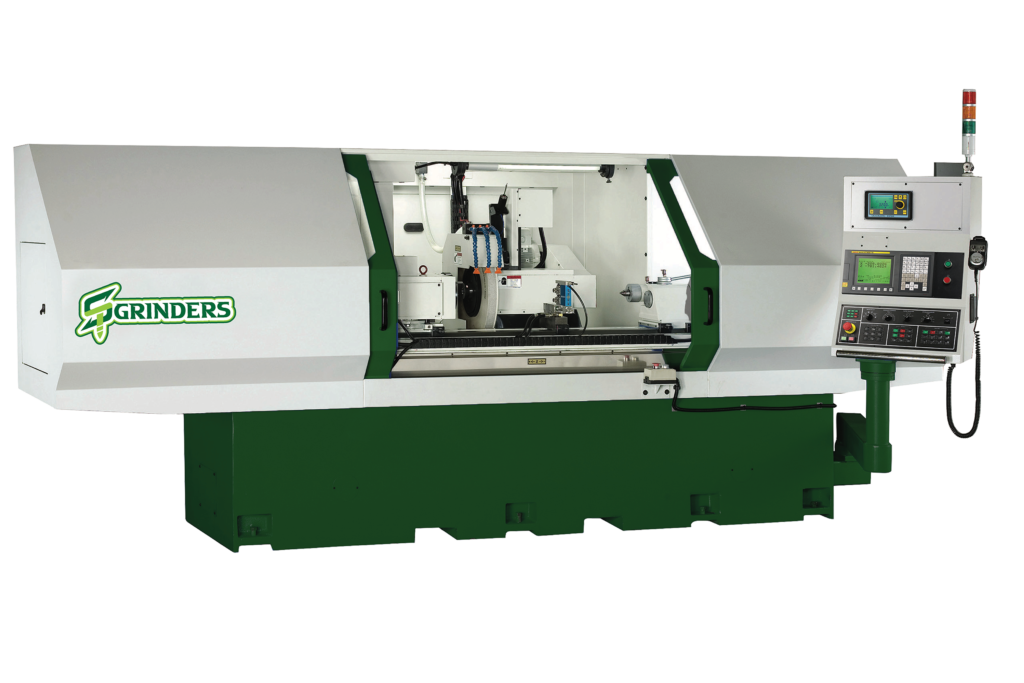
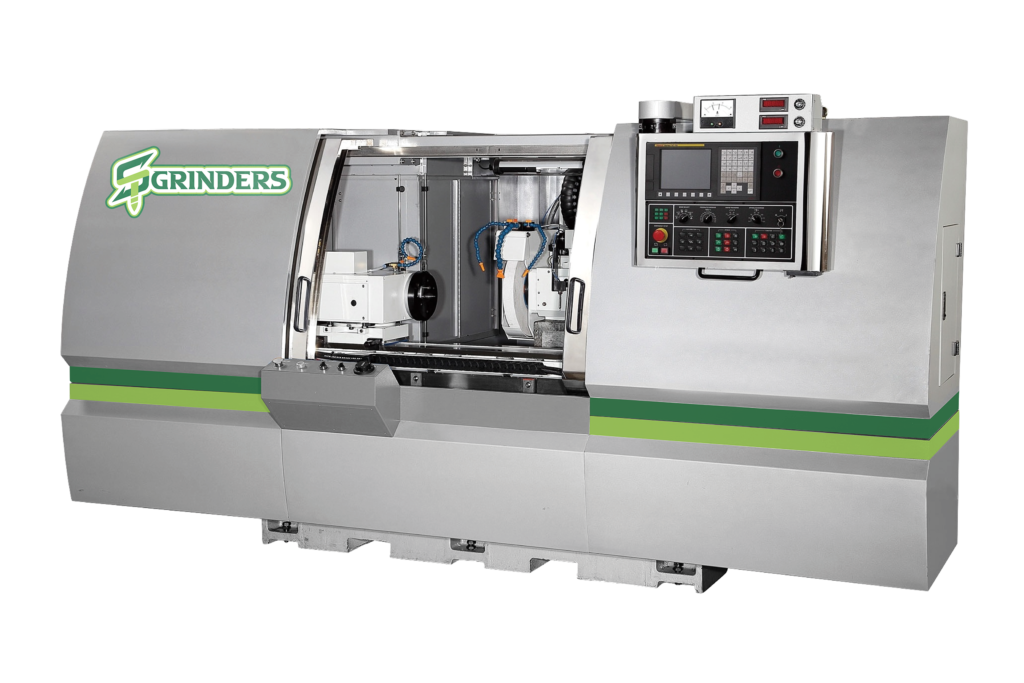
Worth a look: The G-Series OD Cylindrical (CNC) — available in plunge and angle-head configurations from the G25A-35 up through the G45A-120, with minimum increment infeed as fine as ø0.001 mm.
What’s the difference between cylindrical, centerless, and internal grinding?
- Cylindrical grinding shapes the outside diameter of a workpiece held between centers or in a chuck — best for shafts, pins, and rollers.
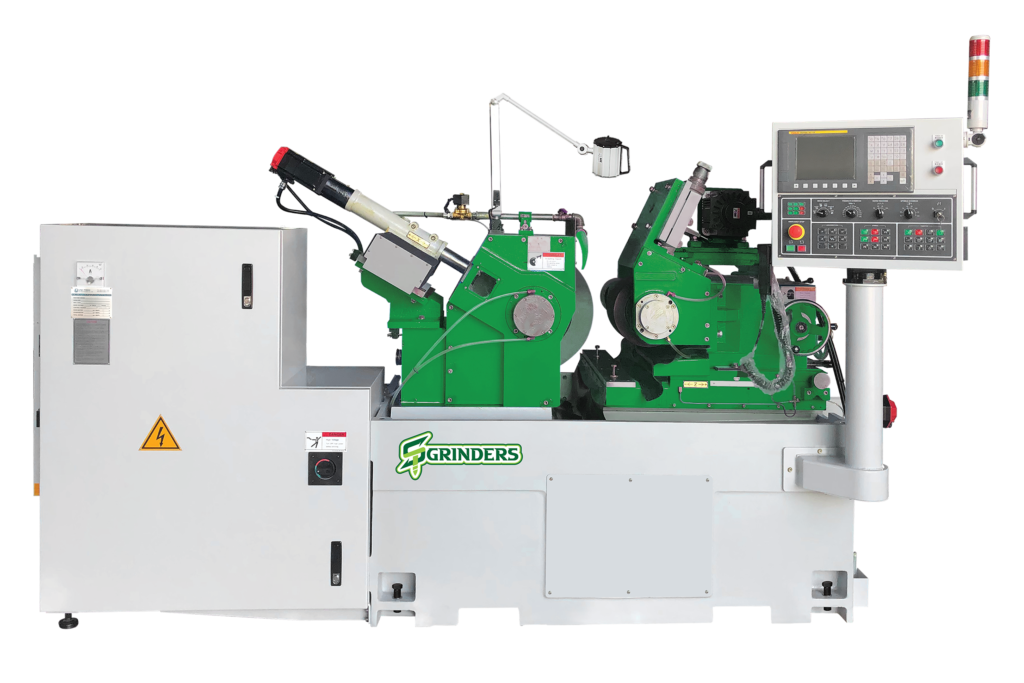
- Centerless grinding removes material from a part’s outer surface without clamping between centers, resting it between a grinding wheel and regulating wheel — faster for high-volume runs of small round parts, with through-feed capability for shafts and bars up to 12 ft long.
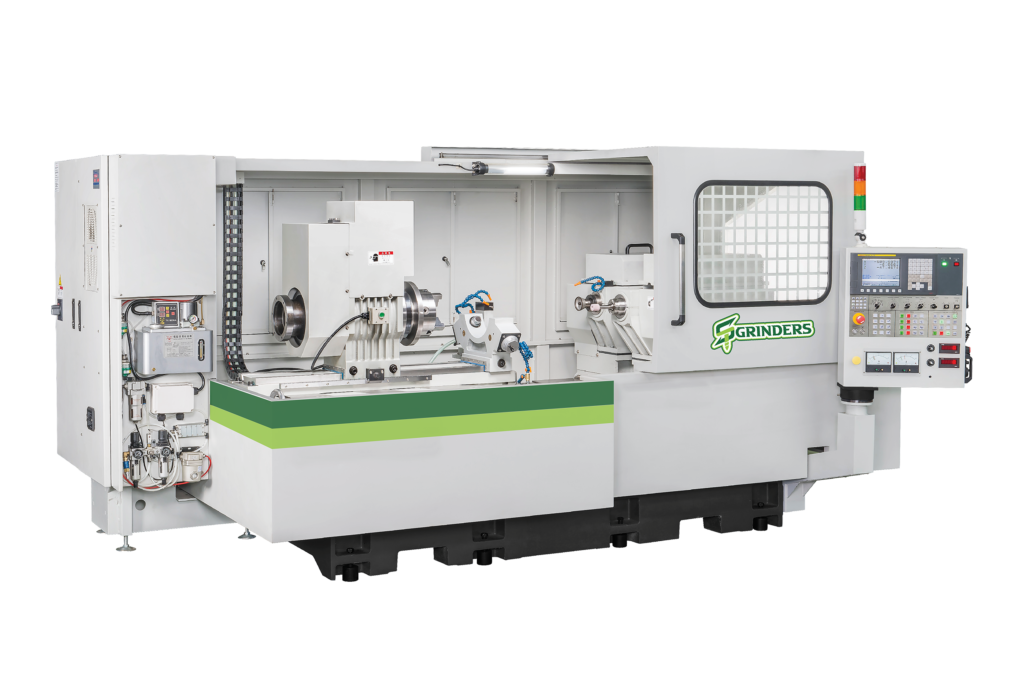
- Internal grinding finishes the inside diameter of a bore or hole — ideal for bearing races, bushings, and precision cavities.
Worth a look: ST Grinders covers all three — G-Series for OD cylindrical, STC-Series for centerless, and GM/GI-Series for internal grinding.
How do I choose between a manual, NC, and CNC grinder?
Manual grinders suit low-volume, highly custom jobs where an operator’s touch matters. NC (numerical control) adds repeatability for mid-volume production. CNC delivers full programmability and the least operator-dependent variation — the standard for shops running consistent, high-precision parts at scale.
Worth a look: The STC-Series Centerless Grinder is offered in Manual (S), NC, and full CNC versions — so you can match control complexity to your production volume without switching machine families.
What size parts can an internal grinder handle?
ID grinding capacity varies a lot by machine. As a reference point, the GM-45 CNC grinds ID diameters from ø6 to ø400 mm (up to ø450 mm max OD swing), while the larger GM-80 CNC grinds ø6 to ø600 mm (up to ø820 mm swing). The compact GI-150 CNC is built for smaller precision bores, from ø6 to ø150 mm.
Worth a look: GM-Series for larger workpieces and dual independent ID/OD wheel heads; GI-Series for smaller, high-precision ID work with spindle speeds up to 30,000 rpm. Both the GM-45 and GM-80 also offer an optional OD grinding wheel head, so a single machine can finish ID and OD features without a second setup.
What part diameters work best for centerless grinding?
Standard workrest setups on the STC-1808/1810/1812 NC and STC-2008/2010/2012 NC handle part diameters from ø2 to ø60 mm, with special workrest tooling extending that range to ø60–100 mm.
Worth a look: The STC-Series, sized by grinding wheel width (08/10/12), scales grinding wheel motor power from 11 kW up to 15 kW depending on model.
Can one machine grind both ID and OD on the same part?
Yes — that’s the purpose of universal cylindrical grinding, which combines internal and external grinding in a single setup, reducing repositioning error and cycle time on parts that need both features finished to the same reference.
Worth a look: The PMG Universal Cylindrical (CNC), available in PMG-60, PMG-100, and PMG-150 configurations, grinds up to ø300 mm diameter with a built-in high-frequency ID spindle running at 24,000 rpm.
What’s vertical grinding used for?
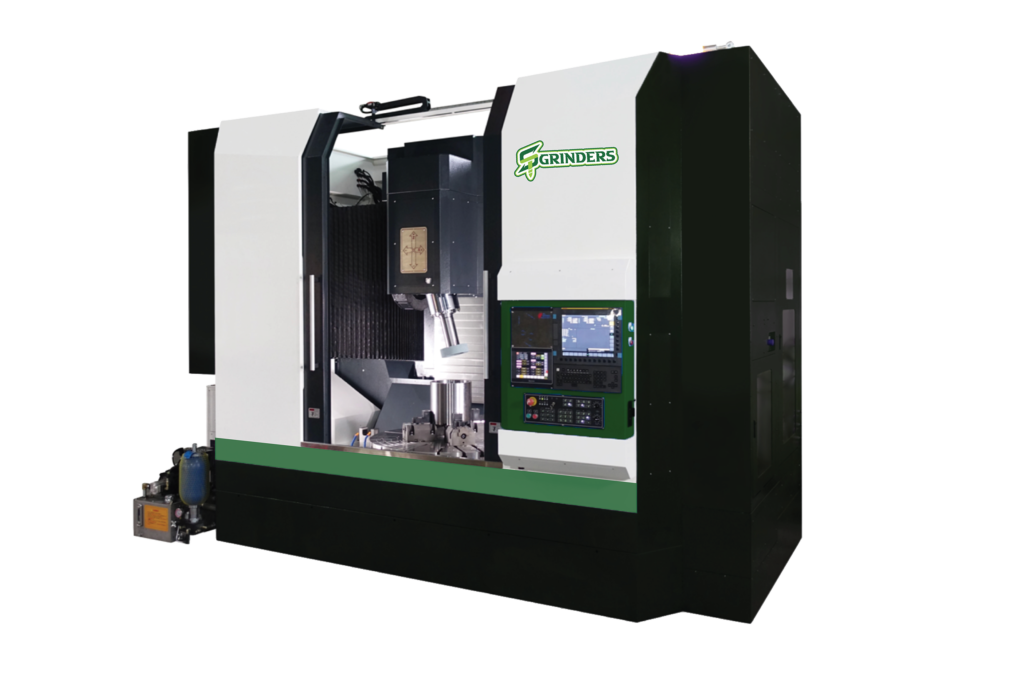
Vertical grinding machines hold the workpiece on a rotary table and grind with a vertically oriented spindle — well suited to bearing race shapes, cam profiles, and other flat or large-diameter parts where a horizontal setup isn’t practical.
Worth a look: Dawn Vertical Grinders (CNC), offered in single-spindle, dual-spindle, and combined vertical/horizontal spindle configurations (DN-300 through DN-2008F series), built for bearing race grinding, power dressing, and CAM profile work.
What tolerances can CNC grinding machines hold?
Tolerances depend on machine rigidity, wheel condition, and part geometry, but ST Grinders’ CNC platforms are built for minimum programmable increments as fine as 0.0001 mm on the infeed axes — the level of precision needed for bearing, aerospace, and medical-grade components.
How often should a grinding machine be serviced?
Most CNC grinders need daily checks (coolant level, wheel condition, way lubrication), monthly inspections of spindle bearings and hydraulics, and annual precision recalibration. Skipping service is a leading cause of tolerance drift and unplanned downtime — which is why local parts and service access matter as much as the machine itself.
What should I look for when buying a grinding machine?
- Spindle hours and rebuild history (if used)
- Availability of OEM parts and local service support
- Control system age and support (Fanuc-based controls are common across ST Grinders’ line)
- Rigidity and thermal stability of the base and slides
- Manufacturer track record — how long they’ve built grinding machines, and who supports the machine after the sale
Ready to Learn More?
ST Grinders is the exclusive North American importer of premium NC/CNC grinding machines from Taiwan, backed by over 70 years of manufacturing expertise and more than 15,000 units sold worldwide. Our team provides sales, engineering, service, parts, and training with fast local support across the U.S., Canada, and Mexico.
Contact ST Grinders to talk about your application.
A SHOW TO REMEMBER!
ST Grinders is heading to IMTS 2026 — and IMTS pricing is LIVE now, with discounts available on select machines.
See our full lineup in action:
G25P50NC – Cylindrical
G32P100CNC – Cylindrical
GM45 – Internal
STC 1810NC – Centerless
DN 302 – Vertical
Backed by 70+ years of precision grinding expertise, we’re bringing sales, service/parts, engineering, automation, and training all under one roof.
Booth #237417
Ask us about our discounted machines before the show!
#IMTS2026 #PrecisionGrinding #Manufacturing #CNCGrinding #MachineTools #STGrinders

UNIVERSAL POWER is here!
We’re bringing serious muscle to IMTS 2026!
Stop by ST Grinders Booth #237417 to see our high-performance cylindrical grinders in action:
• G25P50NC – Cylindrical
• G25A35CNC 2560 – Cylindrical
IMTS Pricing is LIVE — ask us about our discounted machines and special show deals!
With 70+ years of grinding expertise, we deliver more than just machines. We offer full sales, service/parts, engineering, automation, and training support.
Ready to power up your production?
See you in Chicago!
hashtag#IMTS2026 hashtag#STGrinders hashtag#CNCGrinding hashtag#UniversalPower
POWER MEETS CENTERLESS at IMTS 2026!
The ST 1808 CNC Centerless Grinder is ready to for your floor!
IMTS Pricing is LIVE — ask us about our Discounted Machines!
Find us in Booth #237417
70+ years of grinding excellence from ST Grinders.
Sales • Service/Parts • Engineering • Automation • Training
Come see the power for yourself.
#STGrinders #IMTS2026 #CenterlessGrinding #PrecisionGrinding #Manufacturing
More About What ST Grinders Provides
LOCAL SUPPORT
EXPERTISE YOU CAN COUNT ON!
A PARTNER THAT CARES
CYLINDRICAL
INTERNAL
CENTERLESS
UNIVERSAL